Let’s be honest. The shift to remote work has left a lot of us feeling… disconnected. You’re staring at a grid of faces on a screen, trying to read the room, and it’s tough. Where’s the handshake, the subtle shift in posture, the energy in the room?
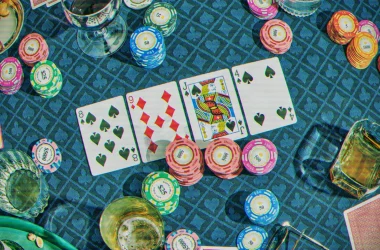
Well, here’s the deal. The principles of reading people haven’t vanished. They’ve just changed form. And surprisingly, some of the best lessons come from the poker table. Poker isn’t just about the cards you hold; it’s about the story you tell—and the story your opponent is telling, often without saying a word. These are “tells.” And in a remote world, adapting poker psychology for virtual sales calls and negotiations isn’t just a neat trick. It’s a critical skill.
The New Virtual Poker Face: What Are We Even Looking For?
In live poker, a tell might be a trembling hand or a quick glance at chips. In a Zoom negotiation, the signals are different, but they’re just as revealing. The game has moved from the felt to the screen. Your goal is no longer to spot a physical twitch, but to interpret digital and verbal micro-signals.
The Digital Tells You Can’t Afford to Ignore
Think of these as your new baseline reads. They’re the equivalent of noticing someone’s stack size and betting patterns before you even consider their facial expression.
- Video On/Off: A client who consistently keeps their camera off might be distracted, in a non-private space, or—and this is key—consciously avoiding giving you visual information. It’s a passive-aggressive power move, honestly. Conversely, someone who always has it on is engaging, but maybe also more performative.
- Connection & Audio Quality: Repeated “Sorry, you froze” or bad audio can be a genuine tech issue. But if it happens at crucial moments (like right after you state your price), it can sometimes be a stalling tactic, a digital version of “I didn’t catch that, can you repeat the number?”
- Chat Window Reliance: A participant who types furiously in the chat while others speak might be multi-tasking or preparing a very calculated, non-spontaneous response. It’s the remote equivalent of someone scribbling notes at a table—it signals processing, but also potential distraction.
Reading Verbal & Vocal “Betting Patterns”
In poker, how someone bets tells you more than what they bet. The same is true for speech in a remote setting. The content is the “what.” The delivery is the real tell.
| Vocal Tell | Possible Psychological Meaning | Your Adaptive Move |
| Sudden increase in speech rate | Anxiety, eagerness to convince, or rehearsing a script. They might be “bluffing” through a weak point. | Slow down. Ask a calm, clarifying question to disrupt their rhythm. |
| Pauses after your key points | Processing, disagreement they’re not voicing, or consultation (maybe they’re on a hidden chat with a colleague). | Don’t fill the silence. Let it hang. Say, “Take your time.” The first to speak often concedes. |
| Qualifier language: “I guess,” “Sort of,” “Maybe” | Lack of conviction or authority. They may not be the final decision-maker—a classic “weak hand.” | Gently probe for process: “Who else typically weighs in on a decision like this?” |
Mastering Your Own Digital Table Image
In poker, you cultivate a “table image”—are you tight, aggressive, unpredictable? You need a deliberate remote presence for sales. Every pixel is part of your persona.
- Control Your Environment: A clean, professional, slightly personalized background (a bookshelf, a plant) is your “stack of chips.” It shows preparedness and stability. A messy room or a glaring window is like showing up to a negotiation with coffee stains on your shirt.
- Eye Contact is Everything: Look at your camera, not the screen, when making a crucial point. It creates the illusion of direct eye contact. It’s hard to do, but it’s a power move. It signals confidence—the ultimate strong hand.
- Strategic Use of Silence: This is your check-raise. After you drop your big ask or final offer, stop talking. Mute your mic if you have to. The vacuum of silence in a remote call is deafening and often forces the other party to act, revealing their position.
The Psychological Game: Pressure, Timing, and the Fold
Poker psychology teaches us about applying pressure and recognizing when someone is on the verge of folding (giving up). How does that translate?
Creating Deadline Pressure: Instead of “Get back to me whenever,” use the tools of the medium. “I can see my next call is in 5 minutes, so to summarize…” or “The shared document will lock edits at 5 PM today with the initial terms.” It creates a virtual clock, mimicking tournament blind pressure.
Spotting the “Virtual Fold”: Signs a prospect is disengaging? Minimal verbal feedback (lots of “mmhmm”), camera turned off suddenly, or an increase in typing sounds (they’re likely answering emails). When you see this, it’s time to change tactics or ask a direct, engaging question to pull them back in. Don’t keep “betting” into a pot you’ve already lost.
Putting It All Together: A Hand History Analysis
Imagine a call. You’ve presented a proposal. The client, who had video on, turns it off just as you get to pricing. Their audio becomes slightly delayed. They say, “That number is… interesting. I’d probably need to think about it.”
The Read: The video-off move is a major tell—they’ve removed your ability to see their reaction to the price shock. The verbal pause and weak qualifier (“probably”) signal a weak hand. They likely lack budget or authority.
Your Play: Don’t justify your price (that’s folding to their bluff). Apply gentle pressure with a question anchored in the next step: “Understood. To help your thinking, what specific criteria would you be weighing to move forward? Is it about timing, or breaking down the ROI components?” This calls their bluff and forces a real answer.
The truth is, remote communication hasn’t made human psychology obsolete. It’s just filtered it through a new lens. The stakes in sales and negotiation are real, not plastic chips. But the ability to observe, adapt, and strategically reveal information—that’s the timeless game. You’re not just selling a service or closing a deal anymore. You’re learning to play the player, not just the cards on the table. Even when the table is made of pixels.