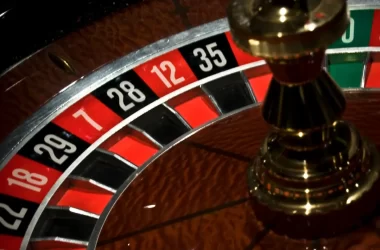
You know that feeling around a casual roulette table with friends? The laughter, the cheap chips, the friendly tension. It feels a world away from a sterile casino floor—or a university economics lecture. But what if I told you that the strategic decisions you’re making, almost unconsciously, are a perfect playground for game theory?
That’s right. Game theory isn’t just for poker pros or nuclear strategists. It’s the study of how we make decisions when the outcome depends on what others do. And in social roulette, where the “bank” might be a buddy and the stakes are bragging rights, these concepts come alive in surprisingly subtle ways.
The Social Roulette “Game”: Players, Payoffs, and Psychology
First, let’s frame the game. In our informal setting, the payoffs aren’t just monetary. They’re social. Winning might mean glory. Losing might mean… well, buying the next round of drinks. The “utility,” as game theorists call it, is a mix of money, reputation, and fun.
You’re not just playing against the house. You’re playing alongside, and sometimes subtly against, the other players. Your decisions—what you bet on, how much you risk—send signals. They affect the group’s mood and the game’s dynamics. This turns a simple game of chance into a fascinating game of strategic interaction.
Key Game Theory Models at Your Fingertips
Honestly, you’re probably using these already. You just don’t call them by their fancy names.
The Prisoner’s Dilemma of Betting Styles
Imagine two friends, Alex and Sam, at the table. Both can choose a “safe” strategy (betting on black/red, odds/evens) or a “risky” one (a single number for a big payout). If both play safe, the game is slow, steady, and… maybe a bit dull. If both go risky, the excitement is high, but they might both burn through their chips fast.
Here’s the rub: The “best” individual outcome? You go risky while everyone else plays safe. You get the thrill of a big win possibility without the table vibe collapsing. But if everyone thinks that way—well, the game ends quickly. It’s a classic coordination problem. The Nash Equilibrium—where no player can benefit by changing only their own strategy—often settles into a mix. Some play safe, some risky, creating a balanced, sustainable game. You’re constantly negotiating this balance, unspoken.
Signaling and Bluffing (Yes, Even in Roulette!)
You place a big stack on your birthday number. That’s a signal. It says, “I’m here for a story, not just to grind.” It can influence others. Maybe they’ll cheer for you, creating a shared, communal target. Or maybe they’ll avoid “your” number out of courtesy—a tiny, social collusion.
This signaling shapes the meta-game. Are you the reckless one? The superstitious one? The cautious mathematician? The roles people adopt, often through their betting patterns, create a richer social layer on top of the pure randomness.
Strategic Moves for the Social Spinner
So, how can you apply this thinking consciously? Not to “win” in a traditional sense, but to maximize the group’s enjoyment—which, let’s be honest, is the real point.
- Consider the Zero-Sum Nature: In true casino roulette, it’s you vs. the house, a pure zero-sum game: their loss is your gain. In social roulette, where you might cash out and settle up later, it’s often non-zero-sum. If everyone has a great time, everyone “wins.” Your strategy should factor in that collective payoff.
- Manage Risk for the Table’s Longevity: Think like a central bank. If you hoard all the chips with ultra-safe bets, you drain the fun. If you go bust immediately, you’re out of the game. A mixed strategy—some safe “investments,” some wild long shots—keeps you in play and contributes to the table’s energy. It’s about utility maximization, not just chip maximization.
- Recognize Iterated Play: This isn’t a one-off. You’ll likely play multiple rounds or nights. This changes everything. Reputation matters. Being a graceful loser or a generous winner in one game affects your “social capital” in the next. Cooperation becomes more valuable.
The Payoff Matrix of a Social Roulette Night
Let’s visualize a simplified payoff matrix. Imagine two players deciding between a Conservative (C) or Aggressive (A) betting strategy. The payoffs are in “social utility points” (SUP), a mix of fun, standing, and chips.
| Player 1 / Player 2 | Conservative (C) | Aggressive (A) |
| Conservative (C) | Both have okay fun, game is stable. (SUP: 3, 3) | P1 seems boring, P2 gets spotlight. (SUP: 1, 4) |
| Aggressive (A) | P1 gets spotlight, P2 seems boring. (SUP: 4, 1) | High excitement, but both may bust fast. (SUP: 2, 2) |
See that? The “best” collective outcome (3,3) is mutual conservatism, but the temptation is to be the aggressive one against a conservative player (4,1). If both give in to that temptation, they end up at (2,2)—a less fun equilibrium. The smart social player understands this trap and sometimes chooses C to elevate the whole game.
Beyond the Table: The Real Win
In fact, applying game theory to informal roulette isn’t about becoming a cutthroat strategist. It’s the opposite. It’s about recognizing the interconnectedness of each choice. That your “rational” move isn’t just about your stack, but about the laughter, the groans, the shared story you’ll tell later.
The wheel is random. The ball is chaotic. But the people around the table? They’re predictable in beautifully complex ways. You’re already playing this deeper game. Now you just have a framework—a lens—to understand why some nights feel electric and others fizzle. And maybe, just maybe, you can nudge the odds toward the former.
So next time you place a chip, you’re not just betting on red. You’re communicating. You’re cooperating. You’re contributing to an unwritten, evolving social contract. And that, honestly, is the most fascinating game of all.