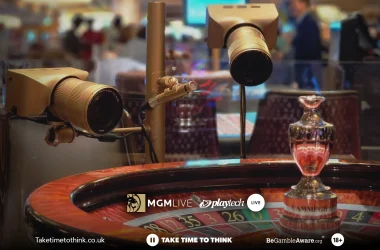
You know that iconic spin. The hypnotic whirl of red and black, the staccato dance of the ivory ball. It’s a universal symbol of chance. But have you ever stopped to think about the wheel itself? I mean, really look at it?
That piece of gaming history on the casino floor isn’t just a random circle of numbers. It’s the culmination of centuries of design evolution and obsessive, almost fanatical, craftsmanship. From crude wooden contraptions to precision-engineered marvels, the journey of the roulette wheel is a story of physics, fraud, and flawless artistry. Let’s dive in.
From Parlor Game to Precision Instrument: A Historical Spin
It all started, as many great things do, with a bit of tinkering. In 18th century France, Blaise Pascal’s perpetual motion experiments accidentally birthed an early roulette prototype. Those early wheels were… well, primitive. Think simple wood, uneven pockets, and a setup that was more about philosophical pondering than perfect probability.
The real game-changer came with the brothers François and Louis Blanc. The story goes they introduced the single-zero wheel in Bad Homburg to compete with the more common double-zero models. This wasn’t just a design tweak; it was a mathematical revolution that lowered the house edge and, honestly, changed casino gaming forever. Their work set the stage for the modern European roulette wheel we know today.
Materials Matter: Wood, Metal, and the Pursuit of Perfection
Early wheels were crafted from whatever was at hand—oak, beech, you name it. But wood warps. It reacts to humidity. For a device demanding absolute balance, that was a big problem. The shift to metal, specifically precision-machined aluminum alloy, was a quantum leap.
Here’s the deal: a modern wheel’s rotor (the spinning part) is now a single, seamless piece of metal. It’s milled and balanced with tolerances that would make a watchmaker nod in respect. This eliminates vibrations and biases, ensuring that infamous random outcome. The bowl, or stator, is often a composite polymer—incredibly durable and resistant to the thousands of spins it endures.
The Anatomy of Impartiality: Crafting a “Fair” Wheel
This is where craftsmanship gets serious. A wheel isn’t just assembled; it’s tuned. Every single component has a role in defeating bias. Let’s break down the key features of a professional roulette wheel:
| Component | Function & Craftsmanship |
| Rotor & Stator | Precision-machined as a pair for a perfectly even gap. The spindle is often tipped with a synthetic ruby or sapphire bearing for near-frictionless spin. |
| Pockets (Frets) | Once made of elegant but fragile wood, now crafted from molded synthetic materials. Each pocket is identical in depth and angle to prevent the ball from favoring any section. |
| Ball Track & Diamond Deflectors | The angled track around the wheel’s circumference. The “diamonds”—those raised, lozenge-shaped obstacles—are strategically placed to randomize the ball’s descent. Their placement is a secret sauce for many manufacturers. |
| The Ball Itself | Ivory is long gone (thankfully). Today’s balls are made of acetal resin or Teflon, meticulously measured and weighed (usually 18mm and 9 grams). Even a 0.1-gram variance can affect outcomes. |
Manufacturers like Cammegh, TCS John Huxley, or Paul-Son don’t just build these parts and slap them together. They subject each wheel to thousands of test spins, using electronic monitoring to detect the slightest statistical anomaly. It’s a relentless pursuit of… well, chaos. True randomness.
The Human Touch in a Digital Age
You’d think with all this tech, the human hand would be obsolete. Not even close. In fact, the artisan craftsmanship in roulette wheel manufacturing is more crucial than ever. A machine can mill a perfect rotor, but a master technician still does the final balancing by feel and ear. They listen to the spin. They adjust the deflectors by microns. They understand that the wheel is a living, breathing performance instrument.
And let’s talk about aesthetics—the felt, the polished chrome, the gleaming wood accents on the apron. That’s all hand-fitted. It’s a blend of old-world cabinetmaking and aerospace engineering. This human touch ensures the wheel isn’t just a random number generator, but a centerpiece of the casino experience.
Modern Challenges and Future Spins
Today’s manufacturers face new puzzles. How do you combat “dealer signature”—where a croupier’s consistent spin force could theoretically create a pattern? The answer lies in even more sophisticated deflector designs and, sometimes, automated ball throwers.
Then there’s the rise of live dealer online casinos. Those wheels you see on screen? They’re the real deal, often even more rigorously maintained than standard casino floor models. They’re under constant, pixel-scrutiny by players worldwide, so flawless roulette wheel engineering is non-negotiable. A single, perceived bias can go viral in minutes.
Looking ahead, we see materials science pushing boundaries. Could new composites or magnetic-field-based levitation systems further reduce friction? Perhaps. But the core philosophy will remain: to create a perfectly balanced, beautiful, and utterly unpredictable universe inside a 32-inch circle.
So next time you see that wheel spin, look past the bet. See the history. Appreciate the silent, meticulous work of countless artisans and engineers—all dedicated to crafting the perfect stage for chance. In a world obsessed with control, they’ve spent 300 years perfecting the art of letting go.