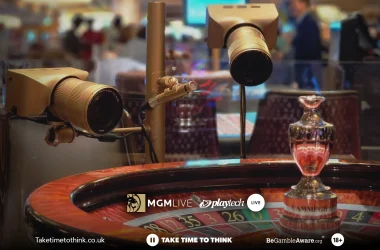
Let’s be honest—the spin of a roulette wheel is pure, chaotic magic. The clatter of the ball, the blur of red and black, that heart-stopping moment before it settles into a numbered pocket. For centuries, players have chased patterns in that chaos, scribbling notes on cocktail napkins, convinced the next spin holds a clue.
But here’s the deal: we don’t live in the cocktail napkin era anymore. We live in the age of big data. And for the modern pattern enthusiast—that curious breed who sees numbers in clouds and sequences in subway schedules—the classic game of roulette presents a fascinating playground. It’s where gut feeling meets gigabytes.
From Biased Wheels to Big Data Sets
Historically, the only real “pattern” to exploit was a physically biased wheel. A slight imperfection, a sticky pocket, a tilt—over thousands of spins, a number might hit more often. Spotting this required painstaking manual observation. It was analytics, sure, but of the most analog kind.
Today, the approach is different. Enthusiasts aren’t looking for faulty hardware; they’re using the game as a pristine data generator. Every spin is a clean, random (or random-enough) data point. The question shifts from “Is this wheel broken?” to “What can I learn from modeling perfect randomness?”
The Toolkit of the Modern Analyst
So, what does this look like in practice? Well, pattern lovers are applying techniques from data science to roulette outcomes, often using software or even simple Python scripts. They’re not necessarily trying to “beat” the house edge—that’s a fool’s errand—but to understand stochastic processes. Here’s a peek at the toolkit:
- Monte Carlo Simulations: Named after the casino haven itself, this method uses random sampling to model probability. Enthusiasts run millions of simulated spins to visualize distributions, test betting systems, and understand variance. It’s like building a digital twin of a roulette wheel to stress-test ideas.
- Regression Analysis: This might sound heavy, but it’s basically looking for relationships. Does the outcome of spin #100 have any predictive power for spin #101? (Spoiler: It doesn’t). But proving that statistically is the whole point. It reinforces the principle of independence.
- Sequence and Cluster Analysis: Humans are terrible at perceiving true randomness. We see “clusters” of reds and call it a “streak,” or note a number hasn’t hit in a while and label it “due.” Data analytics lets you quantify these. How long is the longest realistic streak of evens in 10,000 spins? The answers often defy intuition.
The Real Payoff: Sharpening Your Analytical Mind
Okay, so you’ve crunched 50,000 virtual spins. The house edge remains, rock solid. Where’s the win? The win is in the skill development. For data hobbyists and professionals alike, roulette provides a sandbox with immediate, clear feedback.
You learn about the gambler’s fallacy not as a abstract concept, but as a visible, plottable error in logic. You feel the weight of variance—that short-term results can wildly deviate from the mathematical expectation. These aren’t just casino lessons; they’re critical thinking frameworks applicable to finance, project forecasting, even interpreting news trends.
| Concept Practiced | Roulette Data Project | Real-World Application |
| Data Visualization | Plotting the frequency of outcomes vs. expected probability. | Creating clear charts for business metrics to spot true outliers. |
| Statistical Significance | Determining if a 20-spin “hot streak” on red is meaningful or just noise. | A/B testing a website change—is increased traffic a fluke or a result? |
| Bankroll Modeling | Simulating different betting strategies to see risk of ruin over time. | Personal financial planning and assessing investment risk profiles. |
A Word on the “Holy Grail” and Pain Points
Look, the internet is littered with forums selling “infallible roulette systems” powered by “AI.” It’s the biggest pain point for genuine enthusiasts. Modern data analytics, when applied honestly, does the opposite: it dismantles get-rich-quick schemes. It shows, with brutal clarity, how martingale systems crumble under table limits and finite funds.
The true modern pattern isn’t in the wheel. It’s in the behavioral data—how players react to wins and losses, how they misinterpret randomness. That’s where the analysis gets truly rich, you know?
Where to Start Your Own Analysis
Feeling intrigued? Here’s a simple, ethical way to dive in. Forget real money. Use free simulation software or online tools to generate spin data. Then, try these mini-projects:
- Track the “Sleepers”: Pick a number. Record how many spins it takes to hit. Repeat 100 times. Calculate the average. Compare it to the theoretical expectation (1 in 37 for European roulette). The variance will surprise you.
- Map the “Dominance”: Chart the running difference between red and black hits over 500 spins. You’ll get a wild, meandering graph—a perfect visual of “random walk” theory.
- Test a Simple System: Code a virtual bet of $1 on black every spin. Let it run for 10,000 spins. Graph your virtual bankroll. You’ll see it doesn’t go to zero in a straight line—it has dramatic peaks and valleys before the house edge slowly pulls it down. It’s a powerful lesson in risk.
Honestly, the process is the prize. You end up with a much deeper, almost visceral understanding of probability. The roulette wheel stops being a mystery and becomes a teacher—a relentless, spinning professor of chance.
Conclusion: The Pattern is in the Process
In the end, the intersection of roulette and modern data analytics isn’t about finding a secret code. The universe doesn’t hide its secrets in a casino game. No, the intersection is about something more valuable: cultivating a mindset.
It’s about learning to separate signal from noise in a world drowning in data. It’s about respecting mathematical truth over appealing stories. For the pattern enthusiast, the greatest discovery isn’t a winning bet. It’s the quiet confidence to look at any stream of information—be it stock ticks, social media trends, or the spin of a wheel—and ask the right questions, armed with the tools to find real answers.
And that’s a skill that pays dividends far beyond the felt table.