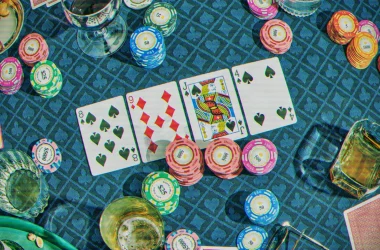
You know the feeling. The cards have been cold for hours. Then, you finally get a decent hand, you get your chips in, and—bam—a two-outer on the river sinks you. Your face gets hot. Your heart thumps. And just like that, your logical game plan evaporates. You’re on tilt.
That’s not just bad luck or poor discipline. That’s your brain in revolt. Modern poker isn’t just about odds and reads; it’s a brutal marathon for your mind. Let’s dive into the neuroscience behind the game—why we tilt, how to harness real focus, and the surprising science of building cognitive endurance at the tables.
What “Tilt” Really Is: Your Amygdala Hijack
We throw the word around, but tilt has a precise biological address: the amygdala. This almond-shaped cluster in your brain is your threat detection center. When you suffer a bad beat or a string of losses, it doesn’t see variance—it perceives a threat. A challenge to your resources, your status, your safety, even.
And when the amygdala sounds the alarm, it does a pretty crude thing. It essentially hijacks your prefrontal cortex—the CEO of your brain, responsible for logic, decision-making, and impulse control. This shift is why a tilted player makes wildly irrational bets. They’re not thinking; they’re reacting. Emotion has overridden executive function.
The Chemical Cocktail of Tilt
This hijack is fueled by a flood of stress hormones: cortisol and adrenaline. Your body is preparing for a fight, not a nuanced river decision. Your perception narrows. You start attributing malice to randomness (“this site is rigged!”). Honestly, you become a worse version of your poker self.
Recognizing this is the first step. When you feel that physical surge, that’s not a signal to play through it. It’s a signal that your brain has literally, chemically, changed states. The game isn’t against the players right now; it’s against your own wiring.
The Antidote: Cultivating Poker Focus and Flow
If tilt is an amygdala hijack, then optimal poker focus is its opposite: a state of prefrontal cortex dominance. Neuroscientists and psychologists call this “flow state.” You’re fully immersed, time distorts, and decisions feel intuitive yet precise. How do you get there? It’s not about trying harder. In fact, trying too hard can backfire.
Training Your Attention Muscle
Focus is like a muscle—it fatigues. The brain’s attentional resources are finite. Every distraction, from a noisy chat box to worrying about your bankroll, drains them. The key is to reduce “cognitive load.”
- Environmental Control: This is basic, but huge. A cluttered space equals a cluttered mind. Minimize physical and digital distractions before you sit down.
- Breathing as a Reset Button: Deep, diaphragmatic breathing isn’t just calming. It stimulates the vagus nerve, which tells your amygdala to stand down and hands control back to your prefrontal cortex. A few deliberate breaths between hands can work wonders.
- Single-Tasking Rituals: Our brains are terrible at multitasking. Build a pre-session ritual—maybe reviewing a chart, setting a stop-loss, and a minute of quiet—to signal to your brain: it’s poker time now. Nothing else.
That said, the real challenge isn’t finding focus for an hour. It’s maintaining it for a long session. Which brings us to the marathon.
Cognitive Endurance: The Brain’s Fuel Gauge
Why do even pros make more mistakes in hour six? It’s not just boredom. Your brain runs primarily on glucose. Complex decision-making—like constantly calculating pot odds and ranging opponents—burns through this fuel rapidly. As glucose dips, so does your self-control and willpower. This is called “ego depletion.”
You start taking mental shortcuts. You play on “auto-pilot,” applying generic rules instead of specific reads. You become more susceptible to tilt. Your cognitive endurance has hit empty.
| Brain Region | Role in Poker | Fatigue Signal |
| Prefrontal Cortex | Logical analysis, impulse control, future planning | Making routine errors, inability to adjust |
| Anterior Cingulate Cortex | Conflict monitoring, error detection | Missing obvious tells or bet sizing cues |
| Insula | Interoception (reading your own gut feelings) | Feeling “numb” to reads or disconnected |
Refueling Your Mental Tank
You can’t just willpower through depletion. You need to manage your brain’s biology.
- Strategic Nutrition: Small, frequent snacks with low-glycemic carbs and protein (nuts, yogurt) provide steady glucose, unlike a sugar crash from an energy drink.
- Micro-Breaks Are Non-Negotiable: Stand up, look at something distant, walk for five minutes every 90-120 minutes. This isn’t slacking. It allows your neural networks to reset.
- Sleep & Hydration: This is so obvious it’s often ignored. A dehydrated, sleep-deprived brain is trying to run a marathon with a sprained ankle. You wouldn’t do that, right? Don’t ask your brain to, either.
Putting It All Together: A Brain-Conscious Poker Practice
So what does this mean for your game? It means moving beyond pure strategy. It means treating your mind as your most important piece of poker equipment.
Start by simply observing. Track not just your hands, but your mental state. When did your focus waver? What triggered a mini-tilt? Use this data. Build a personal “owner’s manual” for your brain. Maybe you need a ten-minute break after a bad beat, no questions asked. Maybe you play your best poker in two-hour sprints, not six-hour grinds.
The frontier of poker advantage isn’t just in studying GTO charts anymore. It’s in mastering the wet, messy, brilliant computer between your ears. It’s about knowing that a well-timed breath is a strategic move. That a walk away from the table is a bet on your future decisions. That understanding the neuroscience of poker isn’t just interesting—it’s the key to unlocking a steadier, sharper, and more resilient version of you at the tables.